Karoo Lamb has been officially registered as a geographical indication in South Africa since 27 October 2023.
The designation ‘Karoo Lamb GI’ is reserved for lambs born, reared outdoors and slaughtered within the defined geographical area. It also recognises the link between the meat’s flavour and sensory characteristics and the native vegetation grazed by the animals in the Karoo. Now that the GI has been recognised, stakeholders must have the tools to manage it and ensure compliance with its rules across the entire designated area. In the case of Karoo Lamb, this covers nearly 20 million hectares. To address this particular challenge, the Karoo Lamb Consortium, the GI’s management body, is developing a digital system to verify producers’ eligibility and enhance traceability. Digitalisation should thus facilitate the integration of new producers whilst streamlining their verification and monitoring.
At the same time, another challenge is emerging: the transition from regulatory recognition to commercial recognition.
By CIRAD Published: 01/10/2026
Verifying origin across a territory of nearly 20 million hectares
How can a geographical indication be administered when its production area covers a territory as vast as the Karoo?
To address this, the Karoo Lamb Consortium has invested in developing a digital process for verifying producers.
Through the Consortium’s website and the Karoo Lamb Administration System (KLAS), producers can submit their application to become registered users of the GI.
The system enables verification that their farm is indeed located within the defined geographical area.
The location declared by the farmer is cross-referenced against land registry data, land-use classifications and satellite imagery. The system thus enables the relevant farms to be visualised and identified across the entire territory.
The verification also covers the practices that applicant producers must declare: the possible presence of planted pastures, the use of a feedlot prior to marketing, or the slaughterhouse used.
These declarations are cross-referenced with land-use data and farm maps.
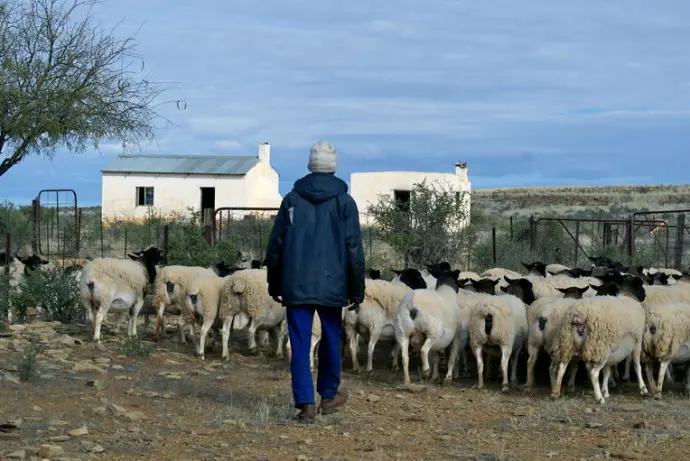 Karoo region, South Africa
From internal checks to strengthening the certification scheme
This digital system is also a first step to to strengthen control and audit procedures: it allows to organise producers’ internal verification at an early stage and to have verified information available prior to the external audit.
The process thus incorporates several levels of verification: submission of the producer’s application, identification and location of the farm, verification of the information and practices declared, validation of membership, and then provision of the necessary data to the auditors. In the event of any inconsistencies, the application may be flagged for further verification even before the external audit takes place.
Once the process is complete and the criteria have been verified, the producer may be registered as an official supplier of Karoo Lamb.
Discussions are currently ongoing between the Karoo Lamb Consortium, the Department of Agriculture, the auditors and the regulatory bodies with a view to strengthening these procedures, particularly with regard to the satellite monitoring system.
Protecting the name is a first step: ensuring this protection remains effective in the long term then requires the ability to identify producers, monitor practices, ensure product traceability and make its origin visible on the market.
 Karoo landscape
Ensuring recognition of origin right up to the shop shelves
Johann Kirsten, in an opinion piece published in the South African press, highlights a paradox: according to him, whilst South African consumers can easily identify certain European products on the shelves that are promoted on the basis of their geographical origin, the visibility of Karoo Lamb as a product of origin remains limited in the national retail sector. Sometimes, lamb – particularly from Karoo farms that meet the origin criteria – is sold without necessarily promoting the ‘Karoo Lamb’ designation to the consumer.
The challenge now, therefore, is to turn this recognised origin into a genuine point of differentiation and a means of enhancing the product’s value in the market.
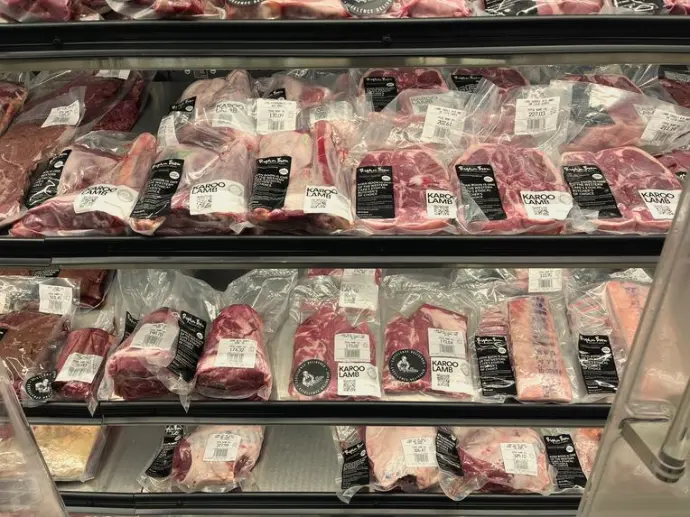 Karoo Lamb
This article was originally published by CIRAD. [Read the original article here.]